
Edifier MR3
4.5Editor score
Hi-Res Audio certified flat response
18 watts RMS output per channel
Bluetooth multi-point connection support
Customizable sound via mobile app
Finding the right monitor is crucial for any music producer seeking accurate sound reproduction. These speakers help you hear every detail in your mix so your tracks translate well to other systems. Choosing the best model depends on your room size, budget, and specific production needs.
We evaluated ten leading Edm Studio Monitor models based on frequency response, power output, connectivity options, and user feedback. Our analysis covers active speakers designed for near-field listening in home studios and professional environments. Each product offers unique features tailored to different workflows and acoustic challenges.
Each pick highlights key strengths and potential trade-offs to help you make an informed decision. You will find details on driver materials, amplifier classes, and room tuning capabilities. Prices and availability can change so always check the latest listings before purchasing your new audio gear.
4.5Editor score

4.8Editor score

4.8Editor score
As an Amazon Associate we earn from qualifying purchases.
This side-by-side comparison outlines the core specifications and design elements of each monitored selected. You can quickly see driver sizes, power ratings, and connectivity options to find the best fit for your studio setup.



The PreSonus Eris E7 XT stands out as a top choice for producers needing reliable near-field monitoring. With a high rating from users, it delivers studio-quality sound that reveals details in your mix without artificial coloring. This monitor is ideal for electronic music production where clarity and balance are paramount.
We may earn a commission when you buy through this link, at no additional cost to you.
Its 6.55-inch woven composite woofer provides deep lows while the 1.25-inch silk-dome tweeter ensures smooth highs. The innovative EBM waveguide creates a wide sweet spot so you hear consistent imaging from different angles. Acoustic tuning controls let you adjust the output to fit your room perfectly.
While it offers professional performance, the need to buy a pair separately might be a consideration for budget-conscious buyers. The bass can be strong so using the acoustic space settings is recommended for smaller desks. These trade-offs are minor compared to the accuracy it provides.
If you want a monitor that translates well to other systems and comes with useful software, this is a strong recommendation. It balances power and precision effectively making it suitable for both beginners and experienced engineers looking for an upgrade.
The waveguide design ensures you hear the true stereo image from various seating positions which is vital for panning decisions.
Adjustable HF and LF trim plus acoustic space settings let you tailor the sound to your specific environment easily.
We may earn a commission when you buy through this link, at no additional cost to you.
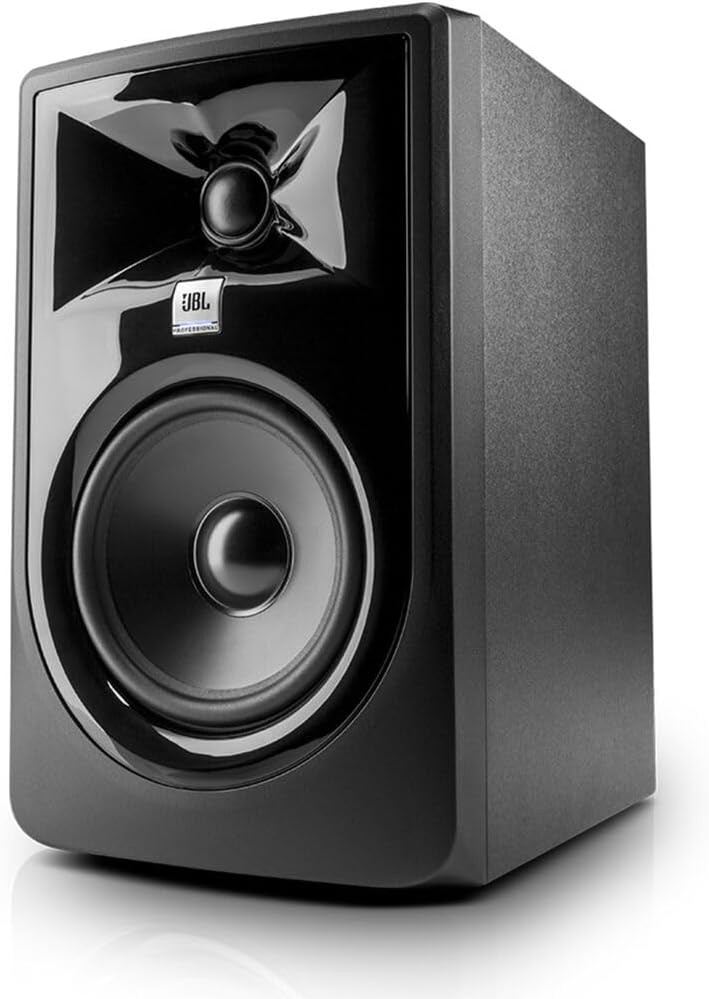
The JBL 305P MkII is renowned for its imaging capabilities thanks to a patented Waveguide. Users praise its ability to deliver crystal-clear sound with a wide sweet spot. This makes it a favorite for electronic music producers and podcasters who need to place sounds accurately in the stereo field.
We may earn a commission when you buy through this link, at no additional cost to you.
Equipped with dual 41-Watt Class-D amplifiers it offers dynamic range and deep bass via a 5-inch woofer and Slip Stream port. The Boundary EQ allows you to tailor the frequency response to your room conditions ensuring accurate mixes. Its sleek MDF enclosure is built to last and minimize resonance.
Some users note the volume knob is on the back which requires reaching around the speaker to adjust levels. There are also reports of sensitivity to certain power supplies causing noise if not managed well. These issues are often solvable with proper setup and placement.
For those prioritizing imaging and stereo field accuracy this monitor is an excellent choice. It provides a refined audio experience that helps you make better mixing decisions across different genres and projects.
The front-firing port reduces turbulence and chuffing allowing for cleaner bass reproduction even at higher volumes.
Boundary EQ and HF Trim adjustments give you control to compensate for acoustic issues without external processors.
We may earn a commission when you buy through this link, at no additional cost to you.
The Edifier MR3 offers impressive value for producers working on a budget. It delivers Hi-Res Audio certification ensuring a flat response from 52Hz to 40kHz for precise monitoring. This makes it a viable option for music creation and critical listening without breaking the bank.
We may earn a commission when you buy through this link, at no additional cost to you.
It features 18W RMS output per channel with enhanced 3.5-inch drivers and 1-inch tweeters for full-range sound. You can switch between Music Monitor and Custom modes easily. The EDIFIER ConneX app allows fine-tuning of sound with in-depth adjustments and personalized EQ control.
The power output is modest which might not fill larger rooms effectively. There are also no physical controls on the rear panel which can limit connectivity flexibility for some setups. However for near-field use in home studios these limitations are acceptable.
If you need a budget-friendly monitor with modern connectivity and accurate sound this is a great pick. It balances features and performance well making it accessible for beginners and hobbyists.
Certified to deliver flat response across a wide frequency range ensuring your mixes translate accurately to other systems.
Three distinct modes let you switch between critical monitoring and casual listening with app-based EQ tweaks.
We may earn a commission when you buy through this link, at no additional cost to you.
This monitor repeats in our list due to its exceptional performance and popularity. The EBM waveguide ensures a wide sweet spot so you hear consistent sound from various angles. It is ideal for collaborative work or when you move around during a session.
We may earn a commission when you buy through this link, at no additional cost to you.
The 6.55-inch woofer delivers deep lows while the silk-dome tweeter provides smooth highs. Acoustic tuning controls allow you to customize output for your room size and orientation. The inclusion of Studio One Prime adds value for those starting production work.
Buying a pair means purchasing two units which increases initial cost. Bass tuning might be necessary in smaller spaces to avoid overwhelming the room. These are minor considerations given the sound quality provided.
For anyone seeking a reliable monitor with strong imaging and room adaptation this model is highly recommended. It suits both music production and multimedia reference tasks well.
The waveguide technology ensures you hear accurate panning and spatial details even when off-axis from the speakers.
Multiple knobs for level and frequency trim let you match the speaker output to your listening environment precisely.
We may earn a commission when you buy through this link, at no additional cost to you.
The YAMAHA Hs5 Pair is a benchmark in studio monitoring known for uncolored sound reproduction. These monitors emphasize sonic purity ensuring you hear the original sound without alternation. This makes them a top choice for professionals who need reliable translation to other systems.
We may earn a commission when you buy through this link, at no additional cost to you.
With a 5-inch cone woofer and 1-inch dome tweeter they offer a frequency response from 54Hz to 30kHz. The bi-amp system delivers 70 watts total power for high performance. Inputs include XLR and TRS phone jacks accepting balanced or unbalanced signals.
The lack of rear controls means you rely on your interface for volume management. The price is higher than budget options but reflects the quality and reputation. For critical mixing work these trade-offs are often worth the investment.
If you want industry-trusted monitors that deliver accurate sound you should consider this pair. They are suitable for a range of production tasks from mixing to mastering.
Separate amplifiers for low and high frequencies ensure clean power delivery and reduced distortion at high volumes.
Extending to 30kHz allows you to hear subtle harmonics and air that contribute to professional-sounding mixes.
We may earn a commission when you buy through this link, at no additional cost to you.
The Ortizan C7 Pair brings modern connectivity to studio monitoring with Bluetooth 5.3 and a built-in DAC. This ensures lossless connection for digital audio and wireless playback. It is versatile for creators who need to connect various devices seamlessly.
We may earn a commission when you buy through this link, at no additional cost to you.
It features 3.5-inch carbon fiber speakers and a 0.75-inch silk dome tweeter for precise sound. The 24-bit DAC minimizes signal loss during conversion. Balanced TRS inputs allow connection to professional mixers and audio interfaces.
Power output is lower than some competitors which limits suitability for large rooms. Bass depth may be insufficient for those needing deep low-end monitoring. However it excels in clarity and connection options.
For those needing wireless flexibility and balanced inputs on a budget this is a strong option. It works well for content creation and casual music production tasks.
The built-in 24-bit DAC ensures digital signals are converted accurately to maintain high sound fidelity.
RCA AUX and balanced TRS inputs let you connect different sources without needing extra adapters.
We may earn a commission when you buy through this link, at no additional cost to you.
The KALI AUDIO LP-6 V2 delivers superior sonic accuracy with a robust DSP system. It emits sound as it is in your mix without alterations. This makes it perfect for producers who need to trust what they hear during critical listening.
We may earn a commission when you buy through this link, at no additional cost to you.
It offers 80 watts of power divided between a 1-inch tweeter and 6.5-inch driver. The frequency range covers 47Hz to 21kHz with a max SPL of 115dB. The front port minimizes turbulence to reduce noise at high volumes.
You may need to adjust low-end based on room placement. Buying two units is necessary for stereo pairs. These are minor issues given the clean output provided.
If you want accurate monitoring without the noise often found in budget options this is a great choice. It suits those focused on mix precision and clarity.
A 12dB noise reduction upgrade ensures quiet operation so you hear only the music not the speaker noise.
Updates to the boundary EQ allow high-quality output regardless of where the speakers are placed in the room.
We may earn a commission when you buy through this link, at no additional cost to you.
The Edifier MR5 is a powerful option with 110W RMS Class D amplification. It supports 24-bit/96kHz wired and wireless LDAC audio for high-resolution sound. This makes it ideal for those needing detailed audio reproduction in mid-sized rooms.
We may earn a commission when you buy through this link, at no additional cost to you.
A 3-way active crossover with 5-inch woofer and 3.75-inch mid driver ensures accurate reproduction. You can tailor sound via rear knobs or the EDIFIER ConneX App. Multiple inputs and Bluetooth 6.0 offer seamless connectivity.
Its size might be too large for compact desks. The price reflects its high-end features which might be steep for some budgets. However the quality justifies the cost for serious users.
If you want powerful wireless Hi-Res monitoring this is a top pick. It suits producers needing high fidelity and versatile connectivity options.
110 watts RMS ensures plenty of volume and headroom for detailed listening even in larger spaces.
LDAC technology allows high-quality wireless streaming preserving more audio detail than standard Bluetooth.
We may earn a commission when you buy through this link, at no additional cost to you.
The Mackie CR4.5BT combines studio-quality sound with tone control and Bluetooth. It offers transparent response starting point with a tone knob for shaping. This makes it versatile for producers who also want casual listening or party speakers.
We may earn a commission when you buy through this link, at no additional cost to you.
You can connect via TRS RCA or Bluetooth. A built-in headphone output and mode switch for desktop or bookshelf placement optimize use cases. The silk dome tweeter and woven woofer provide clean articulate sound with low end.
The tone knob adds versatility but may alter accurate monitoring if not used carefully. Deep bass might require a subwoofer connection for full-range work. These are flexible features rather than downsides for creative work.
If you need monitors that work for production and entertainment this is a great choice. It balances professional needs with everyday use effectively.
A tone knob lets you boost bass and high-end sparkle for casual listening or gaming.
A switch optimizes the sound for desktop or bookshelf placement improving clarity in different positions.
We may earn a commission when you buy through this link, at no additional cost to you.
The Yamaha HS8 Pair is known for deep low-end response reaching 38Hz. With 8-inch cone woofers and 120 watts power it handles detailed music production well. It suits those needing to hear the full frequency range accurately.
We may earn a commission when you buy through this link, at no additional cost to you.
The Advanced Magnetic Circuit design ensures consistent output. Frequency response covers 38Hz to 30kHz. These monitors are industry standards for their reliability and sound quality.
Their size requires ample space on a desk. The cost is high but reflects professional grade quality. For critical low-end work this is often worth the investment.
If you need deep bass monitoring and professional reliability this is a top pick. It suits experienced producers working in larger studio spaces.
With a response starting at 38Hz you can monitor the deepest bass elements accurately in your mixes.
Large magnets in an Advanced Magnetic Circuit ensure consistent performance and reduced distortion.
We may earn a commission when you buy through this link, at no additional cost to you.
Selecting the right monitor requires understanding your room size budget and specific production needs. This guide outlines key factors to consider for accurate sound reproduction.
Larger woofers like 8-inch models deliver deeper bass while 4.5 to 5-inch drivers suit smaller desks. Look for woven composite or carbon fiber materials for tighter bass and reduced distortion. A silk-dome tweeter ensures smooth highs without harshness.
Choose a size that fits your space and covers the frequency range you need for your genre.
Active monitors come with built-in amplifiers so check wattage for room size. Higher power ensures clarity at louder volumes without distortion. Class D amps are efficient while Class AB offers warm performance.
Ensure the power output matches your listening distance and room acoustics for consistent sound.
A flat frequency response ensures accurate monitoring without coloration. Look for ranges extending to 20Hz or below for deep bass and up to 20kHz for high detail. Some models offer tuning controls to adapt to your room.
Prioritize monitors with a flat curve for reliable mixing and mastering decisions.
Choose speakers with inputs like TRS XLR or RCA to match your gear. Balanced inputs reduce noise in long cable runs. Bluetooth adds wireless flexibility but check for codecs like LDAC for high-res audio.
Ensure the monitor supports the connections your interface or mixer uses for seamless integration.
Room tuning features like HF or LF trim help correct acoustic issues in small spaces. Boundary EQ adjusts bass for wall placement. These controls let you tailor sound without buying expensive acoustic treatment.
Select monitors with acoustic controls if your room has untreated walls or corners.
Established brands often offer better quality control and customer support. Check for warranty terms and user reviews. Proven reliability ensures you get consistent performance over years of use.
Research community feedback to confirm the monitor performs well in real-world studio settings.
Position monitors at ear level and form an equilateral triangle with your listening spot. Angle them inward to aim at your head for best imaging. Keep them away from walls to avoid bass buildup or use acoustic space controls.
Use balanced cables to minimize noise from electrical interference. Set volume to a comfortable level to protect hearing and ensure consistent monitoring. Allow speakers to warm up for stable performance in cold environments.
Dust speakers regularly with a soft cloth to maintain tweeter clarity. Do not use liquid cleaners near openings. Turn them off when not in use to save energy and protect the components over time.
For small home studios 4.5 to 5-inch monitors are ideal as they provide accurate sound without overwhelming the room. They fit better on desks and reduce the risk of bass buildup in untreated spaces. Larger drivers may require acoustic treatment to sound their best.
Active monitors have built-in amplifiers which simplify setup and ensure proper matching. They offer more connectivity options and room tuning controls. Passive monitors require external amps which add complexity and cost for most music production scenarios.
Use acoustic controls like HF or LF trim to adjust frequencies based on your room size. Place monitors equidistant from your listening spot and away from walls if possible. Measurement tools or apps can help identify room modes and guide adjustments.
Subwoofers add deep low-end below 40Hz which smaller drivers may miss. They are useful for full-range music genres or large rooms. In small treated rooms smaller monitors may suffice without needing a subwoofer for accurate work.
Balanced TRS or XLR inputs are essential to reduce noise in long cable runs. RCA inputs work for consumer electronics. Bluetooth is useful for casual listening but prioritize wired connections for critical music production tasks.
Many monitors offer flat response ideal for music listening and gaming. Some include tone controls or modes for casual listening. Ensure they have appropriate inputs like 3.5mm or Bluetooth for seamless use across different entertainment needs.
This guide highlights ten top options balancing performance price and features for producers. From the PreSonus Eris E7 XT for imaging to the Edifier MR3 for budget-friendly accuracy each model offers unique strengths for different needs.
Prioritize flat frequency response and room tuning controls to ensure your mixes translate well. Consider connectivity options that match your interface and workspace layout for seamless integration into your workflow.
Always verify current pricing and availability before purchase as values may change. Select the monitor that fits your budget and studio environment to achieve professional results with confidence.