
Megohmmeter Insulation Resistance Tester M500 Megohmmeter 0 to 1000MΩ
4.4Editor score
LED zone scale intuitive display
Compatible with Supco M500
Portable design with soft case
This guide compares the top Megohmmeter Insulation Resistance Testers for professionals and DIYers, covering features, safety ratings, and accuracy to help you
Finding the right Megohmmeter Insulation Resistance Tester is crucial for ensuring electrical safety and equipment longevity. These devices measure the resistance of electrical insulation to detect potential faults before they cause failures or hazards. Whether you are an HVAC technician or an industrial electrician, having a reliable tester protects your investments and keeps operations running smoothly.
We have evaluated ten leading models based on their accuracy, safety features, ease of use, and overall value. Our comparison looks closely at voltage ranges, measurement limits, display quality, and additional functionalities like multimeter capabilities. This ensures you can make an informed decision that aligns with your specific testing needs and budget constraints.
Each product pick highlights key strengths and potential limitations to give you a clear picture of what to expect. You will see detailed breakdowns of specifications, user feedback, and practical applications for every unit on this list. Please note that prices and availability can change frequently, so verify current details before making your purchase.
4.4Editor score

4.8Editor score
4.6Editor score
The following table provides a side-by-side comparison of all ten products to help you quickly identify key specifications and differences. Each entry includes the primary image, direct link, and core technical specs derived from the manufacturer data to facilitate easy selection.


The Klein Tools ET600 stands out as a top-tier option for professionals requiring reliable insulation testing. With a rating of 4.8 stars, this device offers excellent performance across various electrical diagnostics. It combines a multimeter and megohmmeter into one unit, making it versatile for different tasks on the jobsite.
We may earn a commission when you buy through this link, at no additional cost to you.
Its True Root Mean Square technology ensures that measurements remain accurate even when dealing with complex electrical signals. The display is easy to read thanks to the backlight and bar graph, which helps users interpret data quickly. Safety is enhanced through voltage detection warnings that alert you before testing begins.
While the price is higher than some budget alternatives, the build quality and precision justify the investment for frequent users. The inclusion of battery indicators and replaceable fuses means less downtime during critical maintenance windows. It is designed to withstand the rigors of daily professional use without sacrificing performance.
If you need a dependable tool that handles both insulation and general electrical measurements efficiently, this is a strong choice. It is particularly well-suited for electricians who value accuracy and safety features in their equipment. The ease of use makes it accessible even for those less experienced with insulation testing procedures.
The TRMS technology ensures readings are precise regardless of wave shape or distortion in the circuit.
Built-in voltage detection prevents accidental testing on live circuits, protecting both the user and the equipment.
We may earn a commission when you buy through this link, at no additional cost to you.
This M500 Megohmmeter offers an excellent entry point for those needing reliable insulation testing without a high cost. With a 4.4-star rating, users appreciate its simplicity and effectiveness for common HVAC and electrical tasks. It is specifically designed to be compatible with the widely used Supco M500 specifications.
We may earn a commission when you buy through this link, at no additional cost to you.
The LED zone scale provides immediate visual feedback on insulation health using red, yellow, and green lights. This intuitive display eliminates the need to interpret complex numbers, making it easier for technicians to assess conditions quickly. It covers essential motor winding and compressor tests efficiently.
Despite its budget-friendly price, the device is built with impact-resistant materials to handle field conditions well. The included soft case adds value by protecting the instrument during transport to different job sites. It is a practical choice for contractors who need multiple units or want a backup tool.
For DIYers or maintenance crews focused on standard applications, this meter delivers consistent results. It may lack advanced features found in premium models, but it covers the basics effectively. The portability and ease of use make it a favorite for quick checks on various electrical components.
Color-coded lights instantly communicate whether insulation is good, cautionary, or bad for faster decision making.
Designed specifically to test hermetic compressors and motor windings common in heating and cooling systems.
We may earn a commission when you buy through this link, at no additional cost to you.
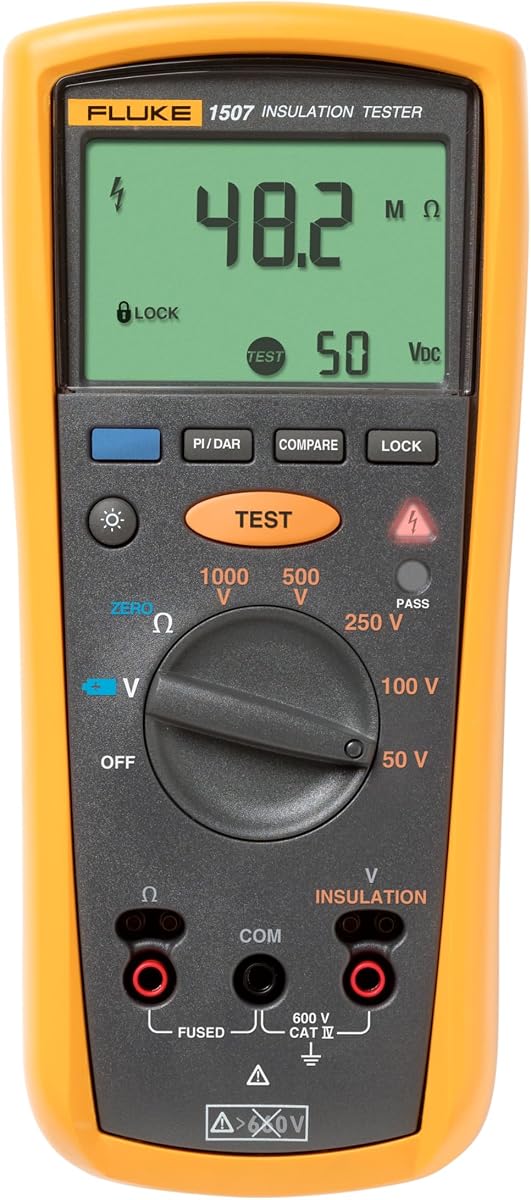
The Fluke 1507 represents the gold standard for industrial insulation testing with its exceptional build and accuracy. Rated at 4.6 stars, it is a trusted choice for facilities requiring strict compliance and precise data. Each unit comes with a NIST-Traceable Calibration Certificate, ensuring it meets high-quality standards from day one.
We may earn a commission when you buy through this link, at no additional cost to you.
Safety is a major focus with live circuit detection that prevents testing if voltage above 30 volts is present. This feature protects both the user and the device from damage or injury during unexpected energized scenarios. The remote test probe allows for easy testing in hard-to-reach areas without exposing hands to high voltage.
Although it comes with a higher price tag, the durability and reliability make it a sound investment for serious professionals. The large backlit display ensures readings are visible in dark electrical rooms or outdoor settings. It is designed to last for years of rigorous use without degradation in performance.
This meter is ideal for industrial electricians and facility managers who prioritize safety and accuracy above all else. The comprehensive warranty and support from Fluke add further peace of mind for critical applications. It simplifies complex testing tasks while maintaining the highest levels of precision and protection.
Includes official calibration documentation to satisfy quality system standards and inspection requirements.
Automatic detection of live circuits prevents accidental application of high voltage for user protection.
We may earn a commission when you buy through this link, at no additional cost to you.
Supco is a well-known brand in the HVAC industry, and the M500 continues that legacy of reliable tools. With a 4.6-star rating, this tester is praised for its durability and ease of use in field conditions. It is specifically tuned to diagnose hermetic compressors and motor insulation effectively.
We may earn a commission when you buy through this link, at no additional cost to you.
The clear LED display provides immediate feedback on insulation resistance, helping technicians make quick decisions on equipment viability. It is portable and runs on standard C batteries, making it easy to carry in a service truck. The soft carrying case included in the package helps protect the unit from drops or scratches.
This unit is designed to handle the rough environment of HVAC work, from rooftop units to basement condensers. It measures up to 1000 Megohms which is sufficient for most residential and light commercial applications. Its consistent performance makes it a staple in many service technicians tool kits.
For HVAC professionals, this tester offers the right balance of functionality and cost. It focuses on the most common testing scenarios without unnecessary extra features that add cost. If you maintain a large fleet of motors or compressors, this tool will pay for itself quickly through efficient diagnostics.
Built to withstand drops and impacts common in daily HVAC service and maintenance tasks.
Optimized for testing the insulation of fully enclosed refrigeration compressors and related motors.
We may earn a commission when you buy through this link, at no additional cost to you.
This M500 Compatible model offers similar functionality to the Supco version at a more accessible price point. With a 4.5-star rating, it is well received by users looking for a cost-effective insulation testing solution. It is designed to test insulation on motor windings and compressors effectively.
We may earn a commission when you buy through this link, at no additional cost to you.
The impact-resistant ABS casing ensures the unit survives accidental bumps during transport or use. A resistance range scale display helps users understand the condition of the insulation through clear visual cues. It is suitable for both professional technicians and serious DIY enthusiasts who need to check equipment safety.
It includes a soft portable case for storage which helps keep the unit and accessories organized. The operation manual is straightforward, allowing for quick setup and use without extensive training. This makes it a practical option for those who only need the tool occasionally rather than daily.
If you are looking for a budget-friendly alternative that still delivers reliable performance, this is a strong candidate. It covers the essential range of tests needed for typical HVAC and electrical maintenance. The value it provides makes it a smart choice for smaller shops or independent contractors.
Double-sided ABS casing protects internal components from drops and abrasions during daily use.
Visual display areas quickly inform users if equipment insulation is good, normal, or at risk.
We may earn a commission when you buy through this link, at no additional cost to you.
This variant of the M500 features an LED zone scale that simplifies reading results for users. With a 4.4-star rating, it is appreciated for its simplicity and quick feedback mechanism. The red, yellow, and green lights indicate insulation status clearly without complex numbers.
We may earn a commission when you buy through this link, at no additional cost to you.
The embedded 6-inch test leads reduce the hassle of connecting and disconnecting cables during frequent use. It is lightweight and portable, making it easy to carry in a pocket or tool belt. This is ideal for technicians who need to perform dozens of tests in a single day.
The design focuses on usability, ensuring that even non-experts can understand the results immediately. It covers motor winding tests and compressor checks which are the most common applications for this type of tool. The lack of numeric display keeps the cost down while maintaining core functionality.
For those who prioritize speed and ease of use over detailed numerical data, this unit is excellent. It removes ambiguity from the testing process by providing immediate color-coded results. It is a practical addition to any toolkit where quick assessments are more important than detailed records.
Color coded lights remove the need to interpret complex scales or numbers during testing.
Fixed test leads save time and prevent loss of small clips during field operations.
We may earn a commission when you buy through this link, at no additional cost to you.
This Megaohm Meter offers a range of useful features in a compact and portable package. With a 4.2-star rating, it provides solid value for general electrical and insulation testing needs. It allows selectable test voltages up to 1000V, offering flexibility for different equipment requirements.
We may earn a commission when you buy through this link, at no additional cost to you.
The backlight and data hold features ensure readability and record keeping in dark conditions. A specific safety alert tone warns users when high voltage is being output, adding a layer of safety during operation. It also includes basic multimeter functions for AC DC voltage and continuity checks.
The package comes with test leads, clips, and batteries, making it ready to use right out of the box. Its small size makes it easy to store in a toolbox or carry in a pocket for quick tests. It is well suited for light industrial or residential repair tasks.
If you need a versatile tester that does more than just insulation, this unit is a good fit. The combination of safety alerts and display aids helps prevent errors during testing. While the max resistance is lower than some models, it covers most typical household and light commercial needs.
Rhythmic beep tones warn operators when high voltage is active to prevent accidental contact.
Includes AC DC voltage and continuity checks alongside insulation resistance for broader utility.
We may earn a commission when you buy through this link, at no additional cost to you.
The AIOMEST Megaohm Meter stands out as a comprehensive solution that combines multiple measurement tools into one. With a 4.7-star rating, it is highly regarded for its versatility and precision across various electrical tasks. It is capable of measuring everything from insulation resistance to temperature and current.
We may earn a commission when you buy through this link, at no additional cost to you.
True RMS technology ensures accurate readings even with non-linear loads like variable frequency drives. The 6000-count display offers high resolution, making it easy to see small changes in values. It also includes NCV detection and a thermocouple, which adds significant value for complex troubleshooting.
This unit is ideal for technicians who need to carry one device instead of several. The large display and backlight ensure that data is readable in any lighting condition. The package includes a thermocouple, test leads, and a case, providing a complete toolkit right away.
If you need a powerhouse tool that can handle almost any electrical test on the jobsite, this is it. The range of capabilities makes it suitable for HVAC, industrial, and automotive applications. The cost per feature is very low compared to buying separate instruments for each function.
Combines multimeter, insulation tester, and temperature probe into a single convenient unit.
6000-count LCD provides clear and detailed readings for accurate diagnostics and record keeping.
We may earn a commission when you buy through this link, at no additional cost to you.
This generic multimeter and megohmmeter offers an impressive range of features for the price. With a 4.5-star rating, it is praised for its high voltage capability and data storage functions. It can measure insulation up to 200GΩ, which is suitable for heavy industrial applications.
We may earn a commission when you buy through this link, at no additional cost to you.
The ability to store up to 100 groups of data is useful for documenting test results without pen and paper. Variable voltage settings from 250V to 2500V provide flexibility for testing different types of equipment. The large backlit LCD makes it easy to read even in dark electrical panels.
Safety is addressed with an automatic voltage release function which helps prevent shocks after testing. The silicone protective case helps prevent damage from drops or impacts during transport. It is designed to be durable enough for outdoor and industrial use in harsh conditions.
For users who need high voltage testing and data retention on a budget, this is a strong option. The high max resistance makes it suitable for advanced insulation analysis. It is a practical tool for maintenance teams that need to track insulation degradation over time.
Capable of testing up to 2500V for heavy industrial machinery and large power systems.
Stores 100 readings to help track trends and maintain records without manual entry.
We may earn a commission when you buy through this link, at no additional cost to you.
The UNI-T 1000V Megohmmeter is a versatile tool that supports both insulation and ground resistance testing. With a 4.5-star rating, it offers reliable performance for daily electrical and maintenance tasks. It is widely used for testing transformers, cables, and electrical appliances for safety.
We may earn a commission when you buy through this link, at no additional cost to you.
It features high accuracy and stable performance which ensures that readings are consistent over time. The alarm light and buzzer provide clear alerts when readings fall out of acceptable ranges or during high voltage output. This helps prevent errors and improves safety during operation.
The device includes automatic measurement and low battery indication to simplify daily use. It comes with a solid warranty and return policy which adds confidence to the purchase. The design is compact enough for portability while offering essential professional features.
If you need a tool that can handle multiple testing types including ground resistance, this is a great choice. The ease of operation makes it suitable for both field technicians and home users. Its reliable build and support services make it a dependable addition to any electrical toolkit.
Combines insulation resistance and ground resistance testing for broader application range.
Visual and audio alarms warn of low battery and unsafe conditions clearly during use.
We may earn a commission when you buy through this link, at no additional cost to you.
Selecting the right insulation tester depends on your specific needs, budget, and the type of equipment you will be testing. Understanding key features will help you avoid overpaying for capabilities you do not need or underbuying for critical requirements.
The voltage range determines what types of equipment you can test. Lower voltage testers are suitable for small electronics, while higher voltage models like 1000V are needed for industrial machinery. Ensure the maximum resistance range meets your industry standards to detect subtle insulation failures.
Always choose a tester with a range that exceeds your typical working requirements to ensure accurate and safe testing.
Safety should be your top priority when dealing with high voltage equipment. Look for devices that have CAT ratings and compliance with standards like IEC 61010. Features like live circuit detection and automatic discharge protect you from shock hazards during and after testing.
Verify that the device meets local safety regulations and offers clear warnings before high voltage application.
A clear and readable display is essential for working in low light or dark environments. Backlit screens and large digits make it easier to read measurements without eye strain. Intuitive controls and clear menus reduce the risk of user error during critical maintenance tasks.
Prioritize models with backlit displays and logical button layouts for ease of use in challenging conditions.
Field tools are often subjected to drops, dust, and moisture. A rugged housing made of impact-resistant materials will extend the life of your tester. Look for devices with protective rubber boots and reinforced corners to withstand rough handling on job sites.
Choose a unit with a robust casing to ensure it survives daily drops and exposure to the elements.
Some testers offer extra functions like multimeter capabilities, temperature measurement, or data storage. If you need to perform multiple types of tests, a combination unit can save space and cost. However, ensure that these added features do not compromise the primary insulation testing accuracy.
Evaluate whether advanced features like data logging or multimeter functions align with your daily workflow needs.
Battery life affects how long you can work before needing to swap or recharge batteries. Look for models with low battery indicators to prevent unexpected shutdowns. Standard battery types are preferable as they are easier to find and replace in the field compared to proprietary packs.
Opt for a model with efficient power consumption and indicators that help you plan battery changes in advance.
While budget models can be tempting, consider the long-term value and reliability of the device. Professional grade units often come with better warranties and longer lifespans which can save money over time. Calculate the cost per use and expected durability before making a final decision.
Balance your budget with the need for reliability to avoid frequent replacements or inaccurate readings.
Established brands often provide better quality control and technical support if issues arise. Check for reviews from other professionals in your field to gauge real-world performance. Reliable customer support can be critical if you need calibration or repair services later.
Select a reputable brand with a track record of quality and accessible customer service for peace of mind.
Before starting any test, ensure that the equipment is de-energized and discharged. This is a critical safety step to prevent shock or damage to the tester. Connect the test leads securely to the terminals of the device you are testing to ensure accurate readings.
Select the appropriate voltage setting based on the equipment specifications and industry standards. Apply the test voltage for the required duration and read the insulation resistance value from the display. Record the results if your device supports data storage or write them down manually.
After testing, discharge any capacitive loads and disconnect the leads safely. Store the tester in a dry place away from extreme temperatures and moisture. Regular calibration and visual inspections of the leads will ensure your device remains accurate and safe for future use.
A Megohmmeter is used to measure the electrical resistance of insulation to ensure it is not degraded. By applying a high voltage, it detects leaks or faults that could lead to equipment failure. This helps prevent electrical hazards and extends the life of electrical components.
No, Megohmmeters should never be used on live circuits as they output high voltage that can be dangerous. Always verify that the circuit is de-energized and isolated before testing. Most modern testers include live detection features to prevent accidental connection to live wires.
It is recommended to calibrate your tester annually or according to manufacturer guidelines to maintain accuracy. Regular calibration ensures your readings remain reliable and comply with industry standards. If you use the device in harsh conditions, you may need to calibrate it more frequently.
Standard multimeters cannot apply the high voltage needed to test insulation resistance properly. They measure continuity or low voltage resistance which is not sufficient for insulation testing. You need a dedicated Megohmmeter to detect high resistance values accurately.
A low reading indicates potential insulation damage or moisture intrusion in the circuit. You should investigate the source of the leakage and clean or replace the affected components. Continuing to operate equipment with poor insulation can lead to shorts or fires.
Readings can vary based on the test voltage used, temperature, and humidity conditions. Always compare readings taken under similar conditions or use a specific standard method like PI. Ensure your device is calibrated correctly to minimize discrepancies.
Choosing the right Megohmmeter Insulation Resistance Tester depends largely on your specific application and budget. Whether you need a basic unit for occasional HVAC checks or a premium device for industrial maintenance, there is a model on this list that fits your needs.
Prioritize safety features and accuracy to avoid potential hazards and ensure reliable data. Consider whether you need additional functions like multimeter capabilities or data storage to streamline your workflow. Investing in a quality tool will pay off in the long run through durability and consistent performance.
Always check current prices and availability before purchasing to ensure you get the best deal. Prices can fluctuate, and you may find discounts on higher-end models depending on the time of year. By using this guide, you are well equipped to make an informed decision for your next test.