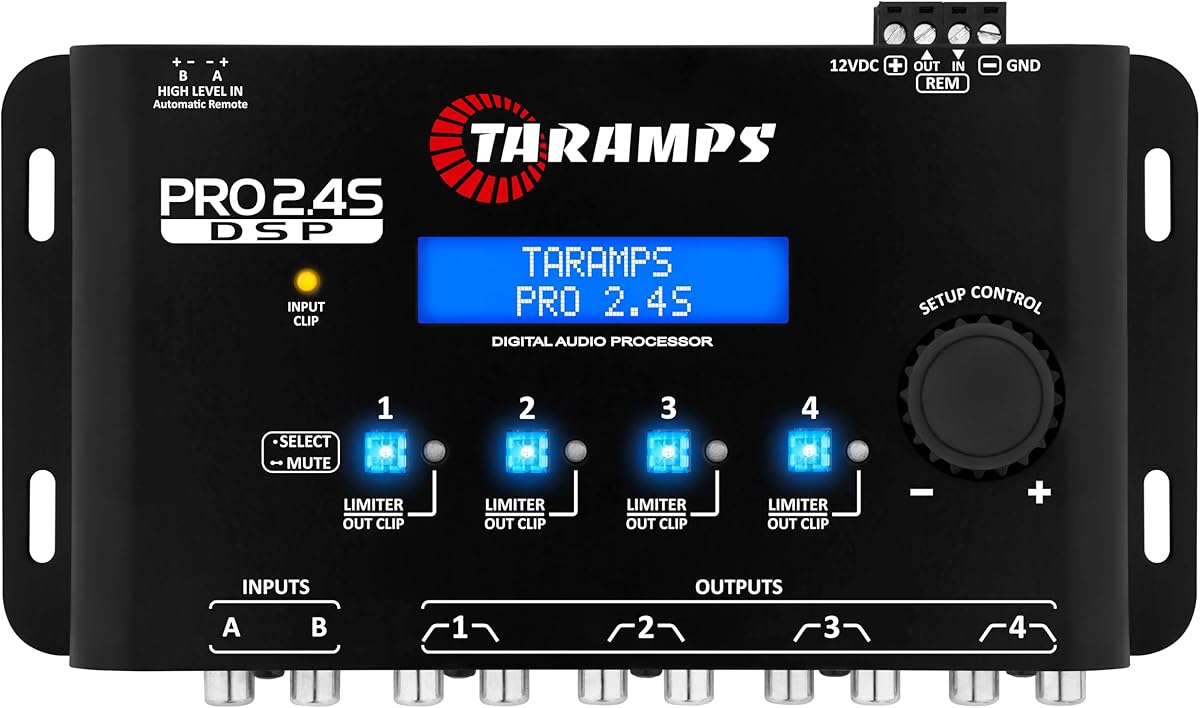
Taramps PRO 2.4S Car Audio DSP Equalizer
4.6Editor score
4 channel digital crossover
Compact and easy install
Active crossover filters
Anti-Pop noise elim
This comprehensive guide compares the top 10 Digital Signal Processor Dsp for Car Audio options available in 2026 to help you choose the right processor for
Upgrading your vehicle audio system often requires precise control over sound stages and speaker performance. A Digital Signal Processor Dsp for Car Audio provides the tools needed to optimize frequency response and time alignment for clearer music reproduction.
We have evaluated ten leading processors based on their input outputs, equalization capabilities, and ease of tuning. Each unit offers distinct features ranging from basic crossovers to advanced parametric controls for demanding setups.
Every pick includes detailed specifications and real-world performance notes to guide your decision. Please note that pricing and availability change frequently so verify current listings before finalizing your purchase order.
4.6Editor score
4.6Editor score

4.6Editor score
This table presents a side-by-side comparison of all ten processors to highlight their key specifications and channel configurations.


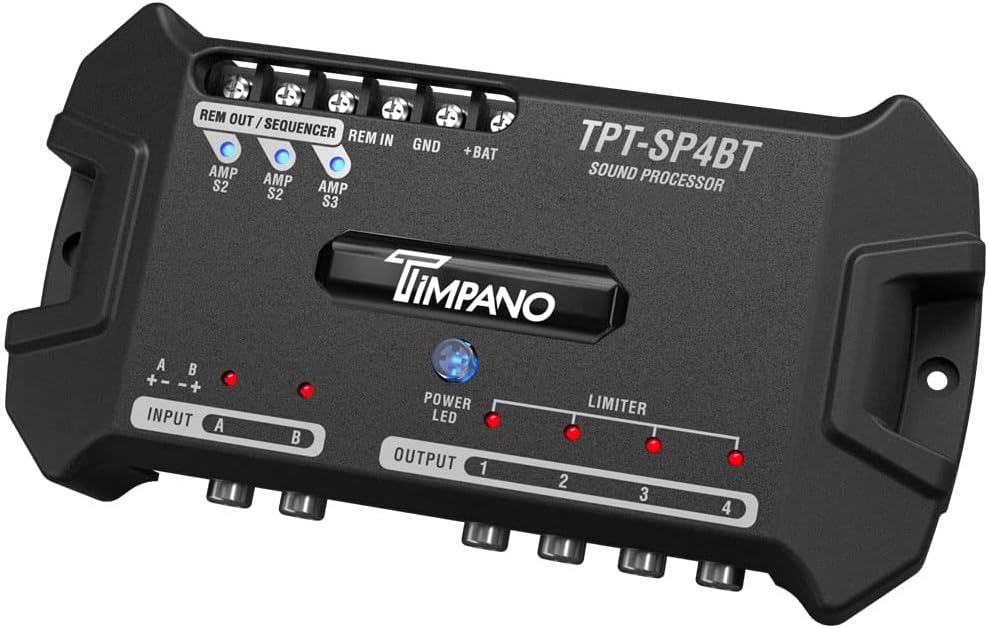


The Taramps Pro 2.4 BT ranks as our top pick for its robust feature set and modern connectivity. With a 4.6 rating from users it delivers reliable performance across various car audio configurations.
We may earn a commission when you buy through this link, at no additional cost to you.
Its 15-band graphic equalizer and parametric EQs allow precise shaping of sound stages while high level inputs simplify integration with factory radios. The Bluetooth 5.4 connection enables real-time adjustments without physical cables.
While the Android-only app limits iOS users the tuning depth compensates for this drawback. Users appreciate the Anti-Puff System which eliminates annoying pop noises during power cycles.
Ideal for enthusiasts seeking a balance of power and ease of use this processor handles complex builds well. We recommend it for anyone needing wireless convenience alongside professional-grade tuning tools.
Bluetooth connectivity allows instant adjustments without needing laptops or wired connections during installation sessions.
Factory speaker wire inputs let you add DSP tuning without replacing the original head unit.
We may earn a commission when you buy through this link, at no additional cost to you.
The PRV AUDIO DSP 2.4X stands out for its intuitive interface and dedicated sequencer features. Rated 4.7 it is praised for straightforward setup and reliable performance in mid-range systems.
We may earn a commission when you buy through this link, at no additional cost to you.
Its 15-band graphic equalizer offers 12 presets for quick adjustments while independent channel outputs ensure precise distribution across speakers. The LCD display provides immediate visual feedback for real-time tuning.
Lack of Bluetooth connectivity is a limitation for remote adjustments but the physical interface remains responsive and easy to navigate. Users value the sequencer for automating power sequences with other components.
This model is best suited for builders who prefer physical controls over smartphone apps. Its affordability and feature set make it a solid choice for standard 4-channel configurations.
The 16×2 character LCD ensures settings are visible in bright sunlight for precise manual adjustments.
The sequencer can trigger other devices helping coordinate power up sequences across multiple components.
We may earn a commission when you buy through this link, at no additional cost to you.
The PRV AUDIO DSP 2.8X expands the 2.4X design to 8 outputs supporting complex multi-channel systems. With a 4.6 rating it is favored for its ability to handle component systems and subwoofers simultaneously.
We may earn a commission when you buy through this link, at no additional cost to you.
All features from the 2.4X remain intact including the 15-band graphic EQ and LCD display. The additional outputs provide flexibility for active setups requiring separate amplification for each driver.
While it shares the lack of Bluetooth the increased channel count justifies the trade-off for larger installations. The sequencer remains a standout feature for managing device power sequences efficiently.
This processor is ideal for users needing more than four outputs without moving to high-end models. It balances cost and channel capacity effectively for serious audio enthusiasts.
Eight outputs allow full active systems with individual tuning for every speaker driver in the vehicle.
Source selection per output enables creative routing of signals to different amplifier channels.
We may earn a commission when you buy through this link, at no additional cost to you.
The PRV AUDIO DSP 2.4X BT adds Bluetooth to the classic 2.4X platform enabling wireless adjustments. However its 3.7 rating suggests some users face connectivity or app stability challenges.
We may earn a commission when you buy through this link, at no additional cost to you.
It includes high level inputs for seamless factory integration and 21 crossover filter types including Linkwitz-Riley for precise acoustic optimization. The app allows real-time tuning but may require occasional troubleshooting.
Despite the lower score the hardware features like the speaker wire converter remain robust. Users who prefer direct control or are not reliant on mobile apps may still find it valuable.
We recommend this unit for those who prioritize wired stability but want optional Bluetooth capability. For seamless mobile experience the Taramps model may be a safer choice.
Twenty-one filter options provide flexibility in tailoring crossover slopes to specific driver requirements.
Built-in speaker wire conversion simplifies adding DSP to vehicles with non-RCA head units.
We may earn a commission when you buy through this link, at no additional cost to you.
The Taramps PRO 2.4S offers essential DSP features at a budget-friendly price point. With a 4.6 rating it is praised for its value and reliability in basic to mid-level systems.
We may earn a commission when you buy through this link, at no additional cost to you.
It includes a 15-band graphic EQ and active crossover controls with multiple slopes for precise frequency distribution. The integrated Anti-Pop System protects your system during power cycles preventing unwanted noise.
Lack of Bluetooth and presets limits remote convenience but manual tuning remains straightforward via physical connections. Its compact size makes it easy to hide in tight spaces like door panels.
This model is perfect for builders prioritizing core functionality over advanced connectivity. It delivers clean sound shaping without breaking the bank for entry-level DSP users.
The price point allows users to add DSP tuning without requiring expensive head unit upgrades.
Built-in pop elimination helps maintain system integrity and listener comfort during power changes.
We may earn a commission when you buy through this link, at no additional cost to you.
The Banda Audiopart X8AiR represents premium processing with 32-bit/96kHz capabilities and a 79-band equalizer. Rated 4.6 it is designed for audiophiles demanding extreme precision in sound staging.
We may earn a commission when you buy through this link, at no additional cost to you.
Its 79 bands per channel allow granular correction of room modes and speaker resonances. Bluetooth app control adds convenience while 4 inputs support multiple sources for comprehensive system management.
The advanced feature set introduces complexity that may challenge casual users. Tuning requires patience and knowledge of acoustic principles to fully exploit the EQ resolution.
We recommend this unit for serious enthusiasts building high-fidelity systems. It offers unmatched control for those willing to invest time in detailed calibration.
96kHz processing ensures minimal distortion and maximum fidelity across the audible frequency range.
79 bands provide surgical control to correct specific acoustic issues without affecting neighboring frequencies.
We may earn a commission when you buy through this link, at no additional cost to you.
The Taramps PRO 2.8S delivers 8-channel power with advanced dynamic control features. Its 4.4 rating reflects solid performance in high-output systems requiring protection and precise alignment.
We may earn a commission when you buy through this link, at no additional cost to you.
RMS and peak limiters offer dynamic control to protect speakers while high input compatibility eases OEM integration. Time alignment and phase controls help create a cohesive soundstage across multiple drivers.
Absence of Bluetooth and presets places tuning fully in the hands of the installer. While functional the process requires physical connection for adjustments rather than wireless convenience.
Ideal for system builders needing output expansion and dynamic protection this unit balances cost and channel capacity. It is a reliable workhorse for active setups.
Peak limiters allow safe headroom management protecting amplifiers and drivers from clipping.
Eight outputs support full-range active systems with individual tuning for every component.
We may earn a commission when you buy through this link, at no additional cost to you.
The Timpano TPT-SP4BT stands out with unique tools like a built-in voltmeter and sequencer. Rated 4.5 it is appreciated for its utility in custom system monitoring and setup.
We may earn a commission when you buy through this link, at no additional cost to you.
Bluetooth control allows remote adjustments while features like frequency generators and pink noise simplify system testing. The voltmeter helps monitor electrical health without external tools.
App dependency can be a limitation if updates disrupt functionality but the core DSP features remain reliable. Its toolset appeals to tech-savvy users managing complex installations.
This model is best for those who value monitoring tools alongside standard DSP tuning. It offers distinct advantages for maintaining vehicle electrical and audio integrity.
Integrated voltmeter provides instant voltage checks helping identify electrical issues during setup.
Pink noise and frequency generators streamline speaker testing and calibration processes.
We may earn a commission when you buy through this link, at no additional cost to you.
The Dayton Audio DSP-408 offers versatile processing suitable for both home and car audio applications. Rated 4.0 it is valued for its PC software interface and extensive mixing capabilities.
We may earn a commission when you buy through this link, at no additional cost to you.
Its 4 inputs enable signal mixing which is rare in car-only DSPs while 10-band parametric EQs allow precise correction. The GUI software provides a visual approach to tuning for detailed control.
Setup relies on PC connectivity rather than Bluetooth which limits in-vehicle adjustments. While thorough the workflow may be less convenient for those without laptop access.
Ideal for users needing home integration or complex signal routing this unit excels in flexibility. It is a strong choice for audiophiles comfortable with software-based tuning.
Multiple inputs allow blending signals from different sources for enhanced system flexibility.
PC-based GUI provides detailed visualization for precise adjustments during setup sessions.
We may earn a commission when you buy through this link, at no additional cost to you.
The Stetsom STX2448 FLOATING introduces a unique FLOAT MODE allowing multiple audio streams and configurations. Rated 4.4 it is praised for its professional tools and subharmonic bass capabilities.
We may earn a commission when you buy through this link, at no additional cost to you.
Input level LEDs provide real-time visual feedback for clipping ensuring safe signal processing. The encoder button offers tactile control for navigating settings without external devices.
Manual tuning without Bluetooth limits remote convenience but the hardware indicators add reliability. Subharmonic bass features provide extra depth without requiring separate modules.
Best for users exploring unique modes or needing visual signal feedback this unit offers distinct advantages. It stands out for its specialized features beyond standard DSP functions.
Different data flows enable flexible configurations for specialized audio processing needs.
LED indicators show input saturation helping prevent distortion and protect system components.
We may earn a commission when you buy through this link, at no additional cost to you.
Selecting the right DSP depends on your system complexity, input requirements, and tuning preferences.
The number of outputs determines how many speakers or subwoofers you can tune independently. Look for 4 or 8 outputs depending on your system size and active configuration needs.
Ensure the input count matches your sources so RCA and high-level inputs for factory radio integration without needing external converters.
Graphic EQs offer quick presets while parametric EQs provide precise frequency control. Choose based on whether you need manual tuning or want ready-made options for faster setup.
Higher band counts allow finer correction of acoustic issues but require more expertise to utilize effectively.
Bluetooth-enabled units allow wireless adjustments without connecting a laptop or phone wire. This convenience simplifies fine-tuning after installation but may vary in app stability.
If you prefer tactile control physical interfaces with LCD displays may be more reliable for long-term use.
High-level inputs convert speaker wire to RCA allowing you to keep your factory head unit. This feature is essential for OEM upgrades without modifying dash wiring.
Check for auto turn-on capabilities that synchronize the DSP with your vehicle ignition for seamless operation.
Advanced DSPs offer multiple filter types like Linkwitz-Riley or Butterworth to optimize speaker performance. Select filters that match your driver specifications for clean separation.
Adjustable slopes and frequency ranges ensure you can tailor the sound to your exact driver setup and enclosure design.
Limiters and clip indicators prevent distortion and protect speakers from damage. Look for RMS and peak limiters to manage gain safely.
Anti-Pop systems eliminate turn-on noise improving listener comfort and system reliability during power cycles.
User interfaces vary widely from simple apps to complex PC software. Choose one that matches your comfort level with technical adjustments and setup processes.
A responsive interface reduces setup time and ensures you can make real-time changes during installation.
Pricing ranges from affordable models to high-end processors. Balance cost with features to ensure you get tools that match your specific needs.
Investing slightly more in features like Bluetooth or channel count can save money in the long run by avoiding future upgrades.
Start by connecting inputs either RCA cables for aftermarket head units or high-level wires for factory radios. Ensure all connections are secure before powering the unit to prevent signal noise.
Use the included app or PC software to access settings. Begin with presets or factory calibration to get a baseline before making manual adjustments to EQ and time alignment.
Regularly check input levels and limiters to avoid clipping which can damage speakers. Keep firmware updated if supported to ensure optimal performance and compatibility.
No, most DSPs support high-level inputs which connect directly to factory speaker wires. This allows you to retain your original head unit while adding digital tuning capabilities.
A crossover filters frequencies to specific speakers, while a DSP performs that plus equalization time alignment and gain control. A DSP acts as an advanced crossover with much more control.
No, many units use PC software or physical interfaces for tuning. Bluetooth adds convenience but is not mandatory for achieving professional sound quality.
Four outputs suit basic setups with front and rear speakers plus subwoofer. Eight outputs are ideal for multi-way component systems needing individual channel tuning.
Yes, provided the DSP supports high-level inputs and your factory amplifier accepts standard line-level signals. Verify compatibility to avoid signal loss or noise issues.
Yes, by correcting phase issues and frequency imbalances. Proper tuning significantly improves clarity staging and bass response compared to untreated factory audio.
We recommend the Taramps Pro 2.4 BT as the top pick for its balance of features and connectivity. Budget users may prefer the Taramps 2.4S for essential controls at a lower price.
Prioritize input types and channel count based on your existing setup to ensure seamless integration. If you want precise tuning capabilities consider units with parametric EQs and delay controls.
Remember to verify current pricing and availability before purchasing as these items can vary by retailer. Always read recent user reviews to confirm performance expectations for your specific vehicle.