
SMA Coaxial Cable LTE Antenna Extension Kit
5.0Editor score
Dual coax cable installation solution
Low loss 3D-FB structure
Flexible indoor outdoor routing
This guide compares the top coaxial cables for cell phone boosters focusing on signal loss, connector types, and durability to help you choose the right cable.
Choosing the right coaxial cable is critical for maximizing the performance of your cell phone signal booster system. Poor quality cables can introduce significant signal loss, negating the benefits of your amplifier and leaving you with weak coverage inside your home or office.
We analyzed ten top-rated coaxial cables based on their construction, impedance matching, connector quality, and user feedback. Our comparison focuses on low-loss performance, weather resistance, and compatibility with common booster brands to ensure reliable cellular connectivity.
Each product review highlights key specifications, pros, and cons to help you make an informed decision. Please note that product availability and pricing may change over time, so verify current details before making your purchase to ensure the best fit for your setup.
5.0Editor score

5.0Editor score
4.6Editor score
This side-by-side comparison evaluates each cable based on length, connector types, impedance, and shielding to help you identify the best match for your specific signal booster setup and installation environment.
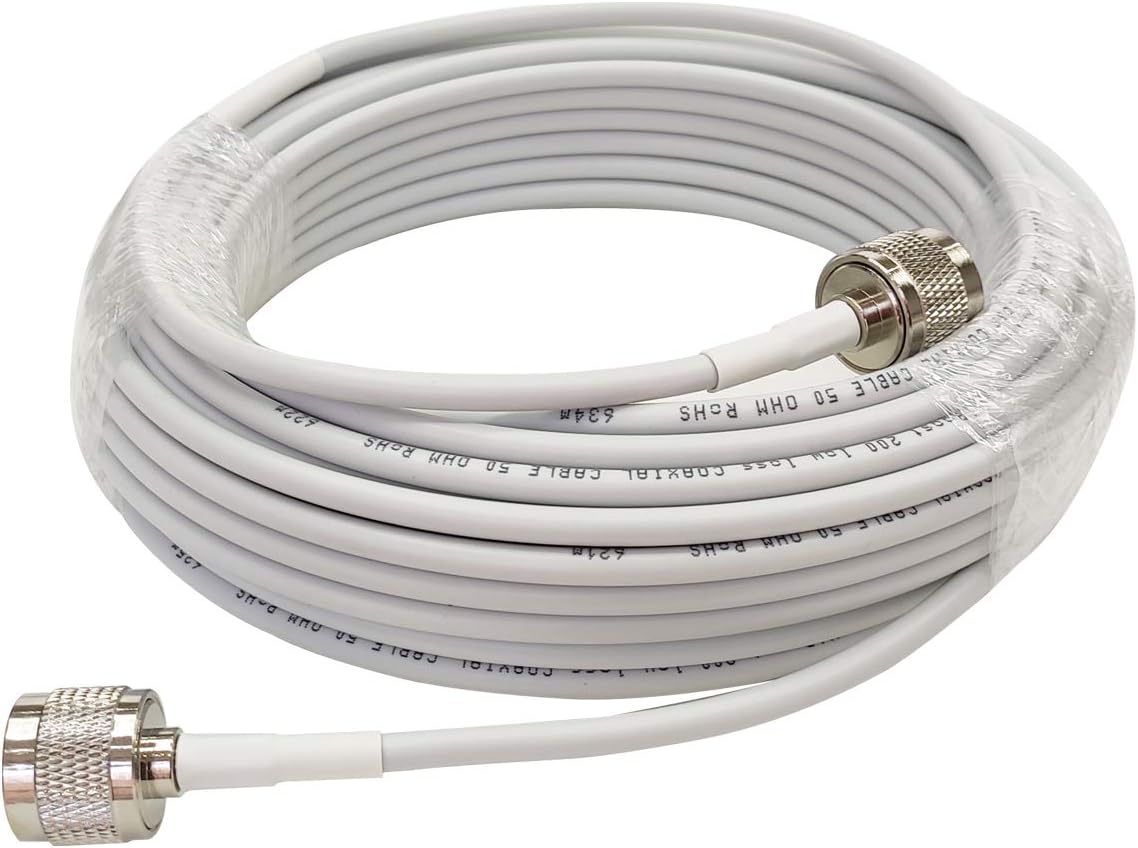



This 100ft coaxial cable is engineered for maximizing signal transfer between outdoor antennas and indoor amplifiers. It holds a perfect 5.0 rating from users who appreciate its ability to maintain strong connectivity over long distances.
We may earn a commission when you buy through this link, at no additional cost to you.
The large center conductor reduces dB loss significantly compared to standard cables. Its nickel-plated connectors resist corrosion while the PVC jacket shields against rain and UV exposure. This combination ensures stable 4G and 5G performance even in demanding environments.
While the cable is durable, the connectors are specific to N-Male and SMA-Male interfaces. Users with different ports will need to purchase separate adapters which adds to the total setup cost slightly.
Buyers seeking premium performance for wide area coverage should choose this cable. It delivers superior voice clarity and faster data rates by preventing signal degradation during transmission.
The 50 Ohm impedance ensures maximum power transfer so you do not lose signal strength between the antenna and booster.
The flexible PVC jacket protects internal conductors from extreme temperatures ensuring long-term reliability outdoors.
We may earn a commission when you buy through this link, at no additional cost to you.
This dual coax kit offers a practical solution for renters or finished homes needing clean installation without drilling large holes. With a perfect 5.0 rating it proves ideal for tight window gaps or tiny wall openings.
We may earn a commission when you buy through this link, at no additional cost to you.
The 20FT extension pairs with a 20IN jumper to route signals through obstacles easily. Built with low loss 3D-FB structure it maintains stable cellular signal strength even when replacing original booster cables.
The primary trade-off is the total length which may not reach distant antennas without adding more cable. Also it only supports SMA connectors so check your device ports before buying.
Users upgrading or replacing cables in apartments will find this kit reliable. It offers long-range layout freedom beyond standard single replacement options at a very affordable price point.
The jumper cable allows for seamless extension through window gaps making it easy to set up without damage.
Low loss construction helps maintain stable signal strength when extending or replacing existing booster cables.
We may earn a commission when you buy through this link, at no additional cost to you.
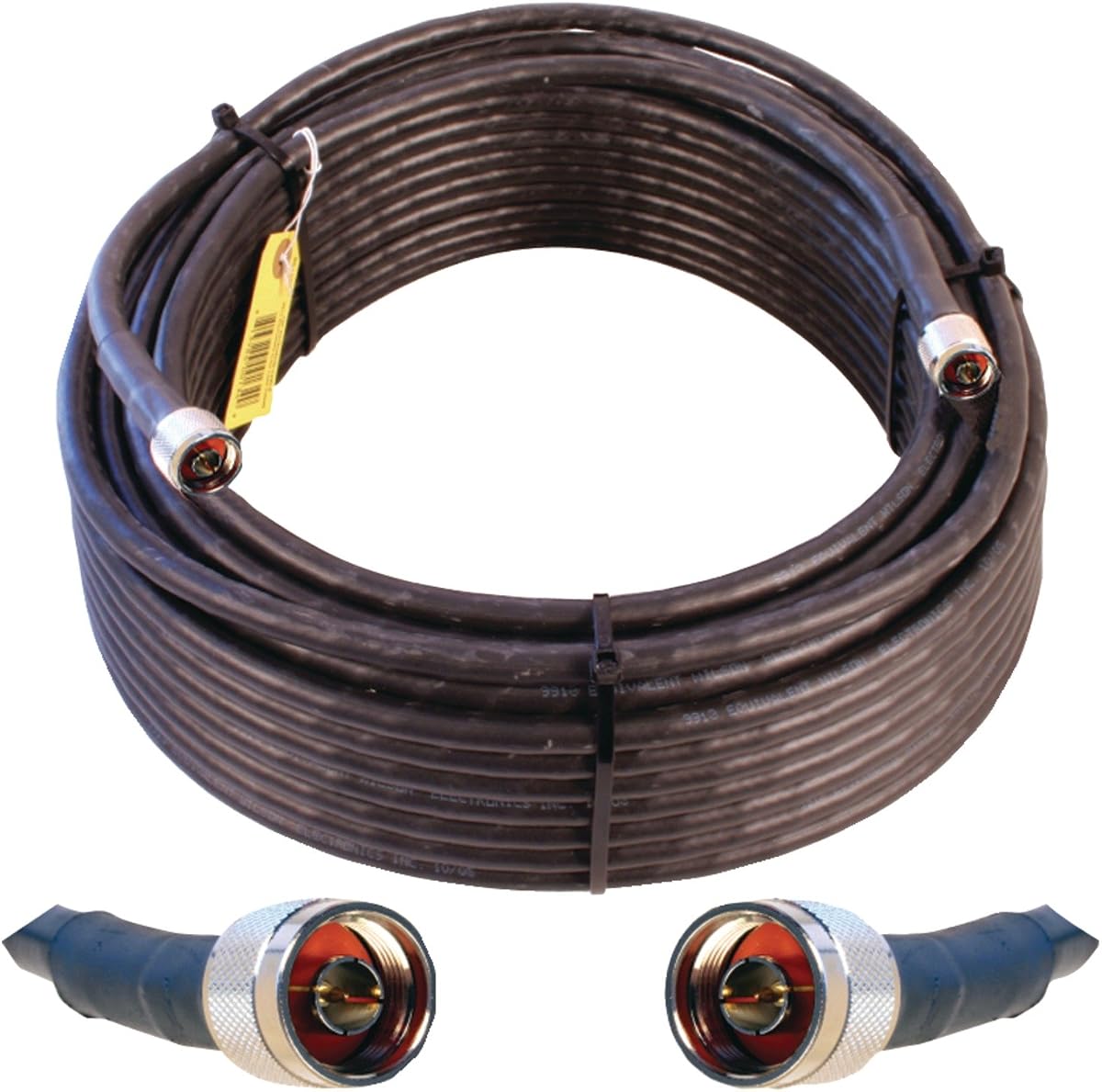
Wilson Electronics brings premium quality to this 100ft coax cable designed for commercial applications and heavy duty booster use. It holds a solid 4.6 rating reflecting its reliability in high-demand scenarios.
We may earn a commission when you buy through this link, at no additional cost to you.
The triple-shielded construction and CL3 rating allow it to carry high voltage safely while minimizing loss. Its N-type threaded connectors are weatherproof and handle frequencies up to 11 gigahertz effectively.
The heavier gauge may make routing through tight spaces harder than lighter alternatives. It is also more expensive but the US-based support and warranty justify the investment.
Commercial users or those with large installations should choose this cable. It ensures uninterrupted signal transfer over large distances with maximum functionality for weBoost amplifiers.
Manufactured and assembled in the USA this CL3 rated cable can carry up to 300 volts for safe commercial use.
Large RF connectors quickly receive large amounts of data enabling high speed frequencies for modern networks.
We may earn a commission when you buy through this link, at no additional cost to you.
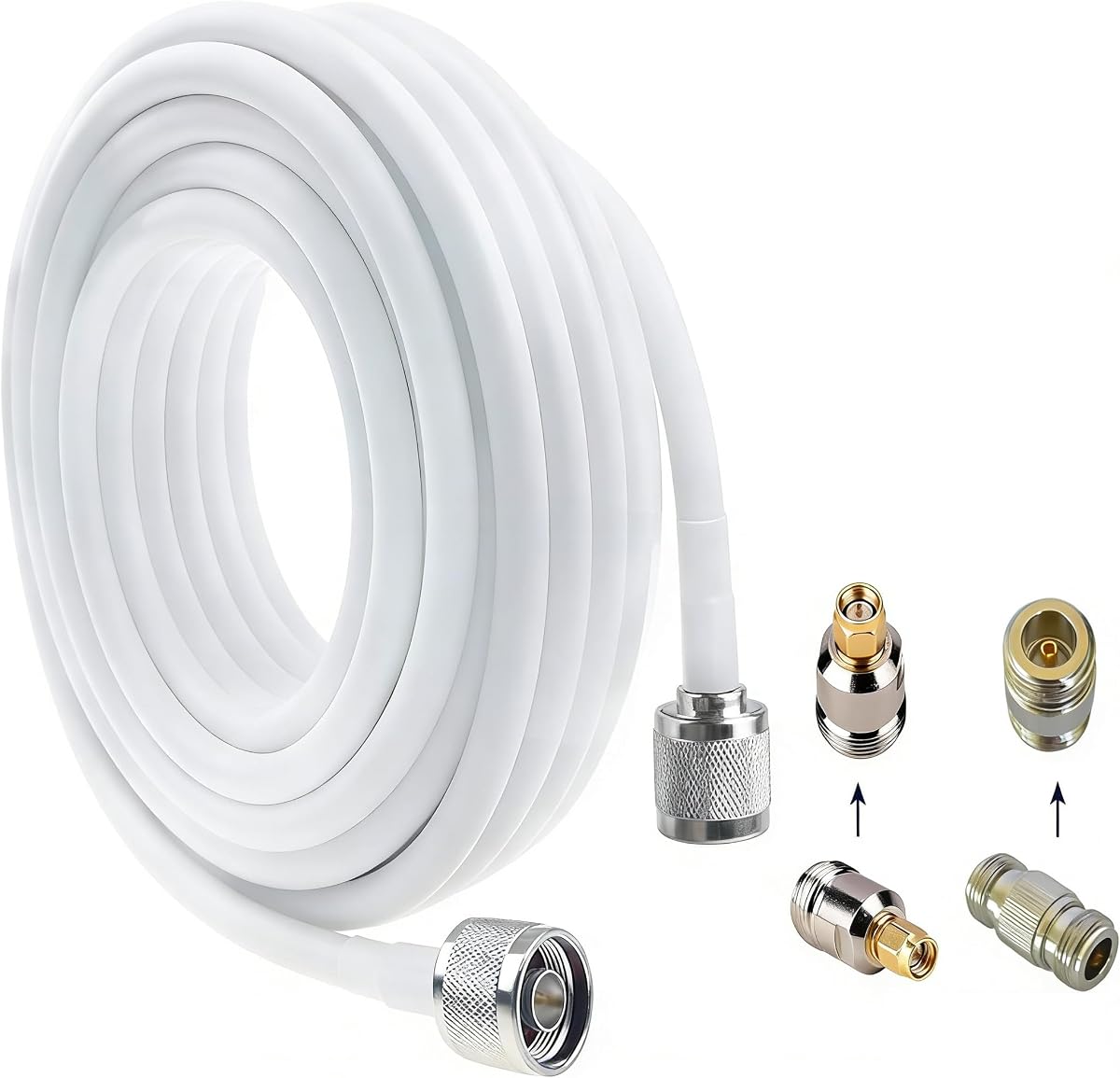
This 50ft cable is built specifically for cellular signal booster systems and outdoor antennas. It comes with adapters which adds versatility for different connector types during setup.
We may earn a commission when you buy through this link, at no additional cost to you.
The 50 Ohm impedance and CCA conductor minimize signal loss for reliable LTE and 5G performance. Strong shielding and waterproof insulation ensure it withstands moisture and temperature changes outdoors.
Because it is 50ft it may not reach very distant antennas without extending further. The standard 3D-FB construction works well but does not offer ultra-low loss features.
Homeowners needing a straightforward extension with included parts will appreciate this choice. It is suitable for routing through walls and attics without degrading performance.
The kit includes N-N and N-SMA adapters providing flexible extension or repair options for most setups.
Strong shielding and waterproof insulation resists moisture and sunlight for long-term reliable outdoor use.
We may earn a commission when you buy through this link, at no additional cost to you.
This cable is designed for low signal loss over short to medium distances using 3D-FB technology. It holds a 4.3 rating for its balance of performance and affordability.
We may earn a commission when you buy through this link, at no additional cost to you.
The waterproof and UV resistant PVC jacket makes it suitable for both indoor and outdoor installations. High quality connectors ensure secure coupling with signal boosters and splitters.
Since it is only 50ft it is best for setups where the antenna is close to the booster. Longer runs might suffer more attenuation than 100ft models.
Users installing boosters in garages or attics will find this reliable. It works well with various RF applications requiring durable waterproof connections.
The 3D-FB coaxial structure minimizes loss allowing stable transmission for boosters and antennas.
Waterproof jacket enables usage across indoor and outdoor environments without environmental degradation.
We may earn a commission when you buy through this link, at no additional cost to you.
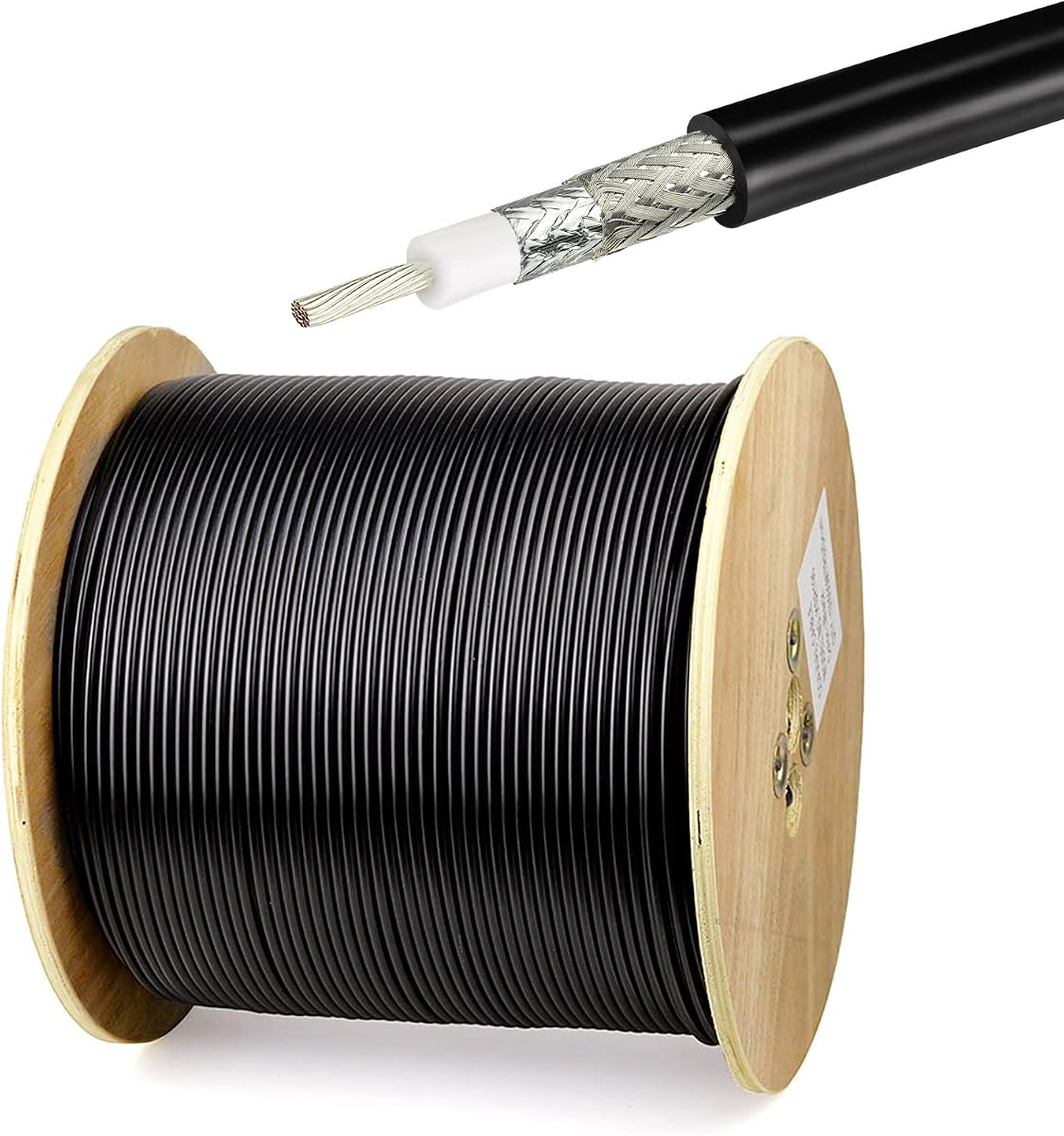
This cable delivers exceptional signal integrity due to copper clad aluminum and double-layer foil shielding. Users rate it highly for blocking interference and ensuring clear transmission.
We may earn a commission when you buy through this link, at no additional cost to you.
The 50 Ohm impedance match minimizes reflection and maximizes power transfer. Connectors are precision-machined for secure connections to antennas and cellular boosters.
The N-Male to SMA-Male configuration requires verification of your device ports before installation. Also copper clad aluminum may be slightly less conductive than pure copper.
Buyers needing long runs without signal loss should consider this option. It supports various internet and RF applications effectively.
Double-layer aluminum foil shield effectively blocks external electromagnetic interference preventing signal leakage.
Engineered for optimal compatibility this cable minimizes reflection to maximize power transfer efficiency.
We may earn a commission when you buy through this link, at no additional cost to you.
Designed with 5D-FB construction this cable ensures maximum signal integrity across long distances. The N-Male to N-Male ends simplify connections for many boosters and antennas.
We may earn a commission when you buy through this link, at no additional cost to you.
Precision-machined connectors with threaded coupling provide optimal shielding at high frequencies. The jacket offers superior weather resistance ensuring reliable performance outdoors.
While highly durable the weight may be a consideration for long vertical runs. Ensure your device has N-Female connectors for direct plugging without adapters.
Network equipment links and RF distribution systems benefit from this robust cable. It is ideal for users prioritizing durability over cost.
Precision-machined connectors with threaded coupling ensure optimal shielding at high frequencies for stability.
Tough and flexible jacket allows easy routing in confined spaces like attics or walls.
We may earn a commission when you buy through this link, at no additional cost to you.
This 10-foot extension cable is ideal for connecting vehicle wireless amplifiers to small vehicle antennas. It extends the reach of your amplifier without significant signal loss.
We may earn a commission when you buy through this link, at no additional cost to you.
The coax attenuates signal less than 2dB making it effective for short internal vehicle runs. SMA connectors fit many mobile booster systems directly.
Due to its short length it is unsuitable for home installations requiring longer cable runs. It serves a very specific niche for automotive applications.
Mobile users needing a quick upgrade for their vehicle setup will find this helpful. It maintains signal quality for on-the-go connectivity.
The short length is perfectly designed for vehicle setups connecting amplifiers to small antennas.
Attenuates signal less than 2db maintaining performance for short extension needs.
We may earn a commission when you buy through this link, at no additional cost to you.
This RG8x cable is a step up from standard RG-58 providing better signal transfer over large distances. It holds a strong 4.7 rating for versatility across many RF systems.
We may earn a commission when you buy through this link, at no additional cost to you.
The waterproof PVC jacket allows use in harsh outdoor environments without inducing signal interference when bent. It is well compatible with multiple connector types including PL259 and SMA.
Since it requires adapters for booster ports ensure you have the right ones for connection. It is generally more flexible than heavier cables but less robust than 5D-FB.
Users needing a flexible general purpose cable for various projects will appreciate this choice. It supports higher frequency use effectively.
Recommended for high-powered applications or users who simply want the best coax possible.
Well compatible with multiple connector types ensuring broad usage across different systems.
We may earn a commission when you buy through this link, at no additional cost to you.
This 100ft RG8X cable offers low SWR and minimal loss for efficient signal transfer. It is built for long distances and works well with cell phone signal boosters.
We may earn a commission when you buy through this link, at no additional cost to you.
The waterproof PVC jacket ensures durability in harsh outdoor environments. The manufacturer provides quality control to maintain high standards across their product line.
It does not come with a spool so planning storage and deployment is required. Adapters are needed to fit specific booster connectors.
Users needing long range capability for large properties or outdoor setups should consider this. It delivers consistent performance for Wi-Fi repeaters and boosters.
The 100-foot length enables long distance signal transfer with minimum loss over larger areas.
All cables are made to the highest standards ensuring reliability and consistent quality.
We may earn a commission when you buy through this link, at no additional cost to you.
Selecting the right coaxial cable depends on several technical factors that impact signal quality and longevity.
Signal loss measured in dB per foot is critical for long runs. Ultra low loss cables like 5D-FB or RG174 reduce attenuation significantly compared to RG58 ensuring more power reaches your booster.
Always choose cables with minimal dB loss for distances over 50 feet to maintain strong connectivity.
Most boosters use N or SMA connectors. Ensure your cable ends match your device ports to avoid purchasing extra adapters that may introduce additional loss points.
Verify connector types on both the antenna and amplifier before buying a cable.
Cell phone systems operate at 50 Ohm impedance. Mismatched impedance causes signal reflection and standing waves reducing performance efficiency.
Look for cables explicitly rated for 50 Ohm impedance to ensure optimal power transfer.
Outdoor cables must have robust shielding to block electromagnetic interference and weather damage. Multi-layer foil and braid shields protect against EMI and moisture.
Opt for cables with waterproof jackets and aluminum foil shields for outdoor runs.
The outer jacket protects internal conductors from UV rays and temperature extremes. PVC or CL3 rated jackets ensure longevity and safety inside walls.
Check jacket ratings for UV resistance and temperature tolerance if installing outdoors.
Measure the distance between your antenna and booster before purchasing. Longer cables introduce more loss so get exactly what you need without unnecessary slack.
Avoid coiling excess cable which can create interference loops affecting signal clarity.
Solid or stranded copper conductors offer better conductivity than aluminum. Copper clad aluminum is acceptable for budget options but pure copper is superior for high frequency.
Prioritize solid copper or copper clad options for minimal resistance and better data speeds.
Modern boosters support 4G and 5G frequencies up to 6 GHz. Ensure your cable supports these frequencies to handle LTE and high-band signals effectively.
Check that the cable frequency rating covers 5G bands for future proofing.
When routing cables avoid sharp bends and kinks that can damage the internal conductor. Use cable clips to secure the line along walls or ceilings for a tidy installation.
Inspect connectors periodically for corrosion or looseness and tighten them with a wrench to ensure stable contact. Replace adapters if they become stripped or damaged over time.
Use waterproofing tape or silicone on outdoor connections to prevent moisture ingress. This simple maintenance step extends the life of your system significantly.
Yes longer cables introduce higher signal loss which can reduce the overall effectiveness of your booster. Select the shortest cable possible for your distance or choose low-loss types like 5D-FB for long runs to maintain strength.
RG8X has a larger conductor and better shielding compared to RG58. This results in lower signal loss over distance making RG8X more suitable for longer runs and higher power applications.
No indoor cables typically lack UV and waterproof protection. Always use outdoor-rated coax with waterproof jackets to prevent degradation from rain and sun exposure.
Adapters depend on the connector types of your cable and booster. If your cable ends do not match the booster ports check your ports to see if N to SMA adapters are required.
Wrap outdoor connections with waterproof tape or silicone sealant to block moisture. This ensures the contact points stay dry and resistant to corrosion over time.
Cell phone boosters require a 50 Ohm impedance match. Using 50 Ohm cables minimizes signal reflection and ensures the amplifier receives the full strength of the antenna signal.
Choosing the right coaxial cable ensures your booster performs at its peak. Our top picks balance low signal loss durability and compatibility for most home setups.
Prioritize connectors and impedance to match your existing equipment. A perfect fit reduces installation errors and ensures reliable signal transfer throughout your home.
Always verify current pricing and availability before purchasing. These factors help you get the best performance from your cell phone booster investment.